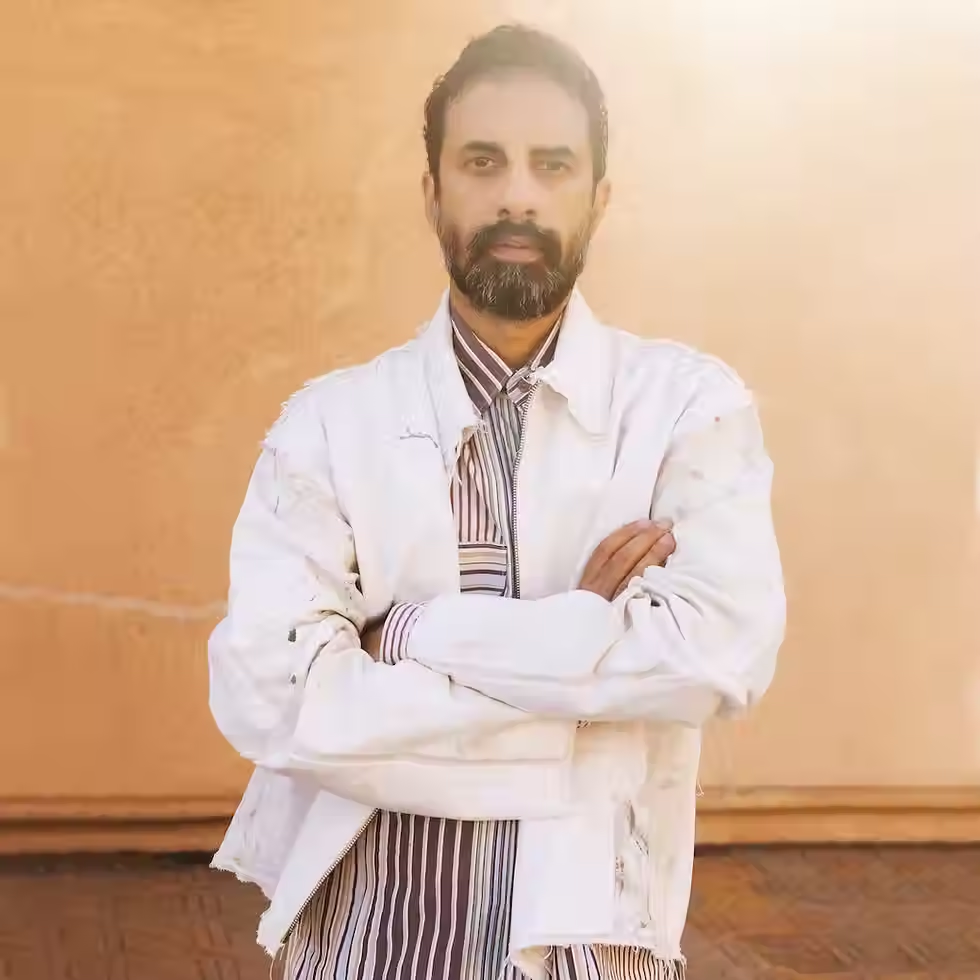

There is a certain unpredictability to Tsumyoki that makes him difficult to place, and that's exactly what makes him interesting.
At a time when artists are often expected to fit neatly into a genre, follow a formula or build an identity that audiences can instantly recognise, the Goan musician has taken a different route. His music moves between hip hop, pop, alternative and everything in between, but it never feels like experimentation for the sake of it. Every release feels like another chapter of someone discovering who they are in real time.
Even after becoming the youngest artist to sign with Gully Gang, winning the MTV Europe Music Award for Best India Act and emerging as one of the most exciting voices to come out of Goa's independent music scene, Tsumyoki doesn't present himself as someone who has everything figured out. In conversation, what stands out isn't the achievements but his openness to growth. For him, every new experience adds another layer to who he is, and that constant evolution naturally finds its way into his music.
Rather than chasing a signature genre, he has always followed emotion. His catalogue reflects that, from early tracks like White Tee and Pink Blue to projects like A Message From The Moon and Housephull. Each release feels different because each one captures a different moment in his creative journey. Instead of trying to create music that fits into a particular space, he focuses on creating music that makes people feel something.
Growing up in Goa has played an equally important role in shaping that perspective. While many see the state through the lens of beaches and holidays, for Tsumyoki it represents familiarity, balance and a sense of home. It is where he disconnects from the pace of the industry and reconnects with himself, a reminder that success doesn't have to change where you come from.
Goa has also shaped his ambition. Through Goa Trap Culture, the collective he co-founded, he became part of a movement that challenged perceptions of what music from the state could sound like. What started as a group of young artists creating together has grown into one of India's most exciting independent collectives, proving that some of the strongest creative movements are built through community rather than competition.

Like every artist of his generation, Tsumyoki is also navigating a world where creating music is only part of the job. Social media has transformed the industry, making content creation an essential part of connecting with audiences. He doesn't shy away from that reality. Instead, he acknowledges the challenge of balancing creativity with visibility, constantly looking for ways to ensure that promoting his work never takes away from the music itself.
That same instinct shapes the way he approaches success. The biggest lesson his journey has taught him is that careers rarely unfold exactly as planned. Some of his biggest milestones arrived in ways he never expected, reinforcing the importance of trusting his instincts instead of trying to control every outcome. It is an outlook that keeps him focused on the work rather than the pressure surrounding it.

His creative process follows a similar philosophy. Instead of worrying whether an idea is too unconventional, he follows whatever feels honest in the moment. That willingness to trust his instincts has allowed him to build a sound that feels personal rather than predictable, one that continues to evolve with every release.
Fashion has become another extension of that identity. For Tsumyoki, style isn't separate from music but part of the same creative language. The visuals, the clothing and the performances all contribute to the world he is building, giving audiences a fuller picture of the artist behind the songs.
Looking back at his earliest releases, he sees growth rather than comparison. The music he made as a teenager was instinctive and unfiltered, while today's work reflects greater experience and confidence in the studio. Neither version defines him completely. Together, they tell the story of an artist who continues to evolve without losing sight of where he started.

More than awards or streaming milestones, Tsumyoki hopes his journey encourages the next generation of artists growing up in Goa to dream bigger. If his success can inspire someone else to believe that a career in music is possible, then he feels he has already achieved something meaningful.
In an industry that often rewards artists for fitting into familiar boxes, Tsumyoki is doing something far more interesting. He is creating on his own terms, embracing change instead of resisting it, and proving that the most compelling journeys are often the ones that refuse to follow a script.