At Lakmé Fashion Week, some shows make a statement and some feel like a full moment. Max Fashion’s 20-year celebration was clearly the latter.
From the very beginning, the energy was different. The lights dimmed, the music kicked in, and the runway instantly felt less like a traditional show and more like a space for expression. Over 35 looks, the showcase unfolded as a reflection of how young India dresses today, easy, confident, and full of personality.
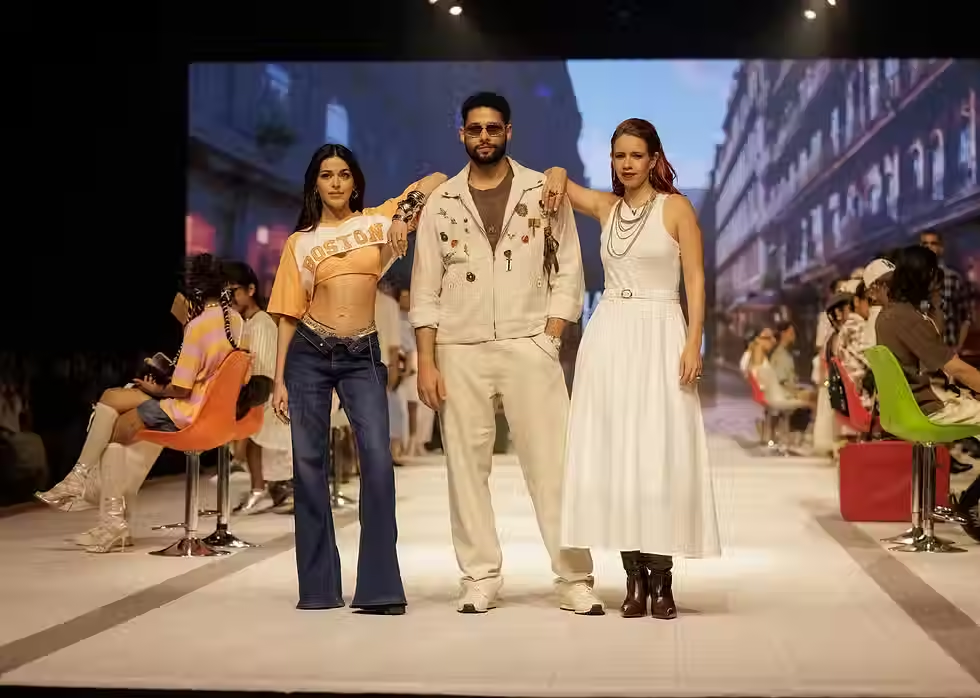
Leading the moment were three distinct faces, Siddhant Chaturvedi, Alaya F, and Kalki Kmoechlin, each bringing their own energy to the runway.
Siddhant Chaturvedi opened the show, setting the tone with a presence that felt natural and effortless. As he stepped onto the runway, the mood shifted instantly. It didn’t feel staged, it felt spontaneous, almost like a performance. His walk carried the Urban segment with ease, bringing in a sense of movement and attitude that matched the collection.
The momentum carried forward as Alaya F took over. Her energy was sharp, confident, and playful, perfectly in sync with the mood of the showcase. There was a lightness in the way she moved, nothing overdone, just a strong sense of individuality that made the moment feel current and relatable.
Siddhant returned for a second walk, this time transitioning into a more relaxed and everyday aesthetic. The shift felt seamless, reflecting the brand’s focus on clothing that moves across moods and moments without effort.
And then came the final moment.
Kalki Koechlin stepped onto the runway as the showstopper, bringing a completely different energy. Calm, composed, and self-assured, she added a sense of balance to the high-energy showcase. Her presence felt grounded, giving the finale a strong and memorable close.

The three came together at the end for a grand finale that felt more like a celebration than a conclusion, bringing the entire mood of the show full circle.
At the centre of the showcase was the idea of “Unserious Everything,” a concept that blended fashion with a sense of ease and playfulness. The collection didn’t take itself too seriously, and that’s exactly what made it work.
It unfolded across three key directions, Urban, Sports Core, and Core Casual, each offering a different take on everyday style.
Urban focused on relaxed summer dressing, with citrus prints, crochet textures, and easy co-ords for women, alongside vintage florals and light silhouettes for men. The pieces felt fresh, easy, and perfect for warm-weather dressing.
Sports Core brought in a more energetic, athleisure-driven mood. Cropped fits, oversized tees, and sporty elements gave the collection a youthful edge, while menswear leaned into basketball-inspired graphics and relaxed shapes.
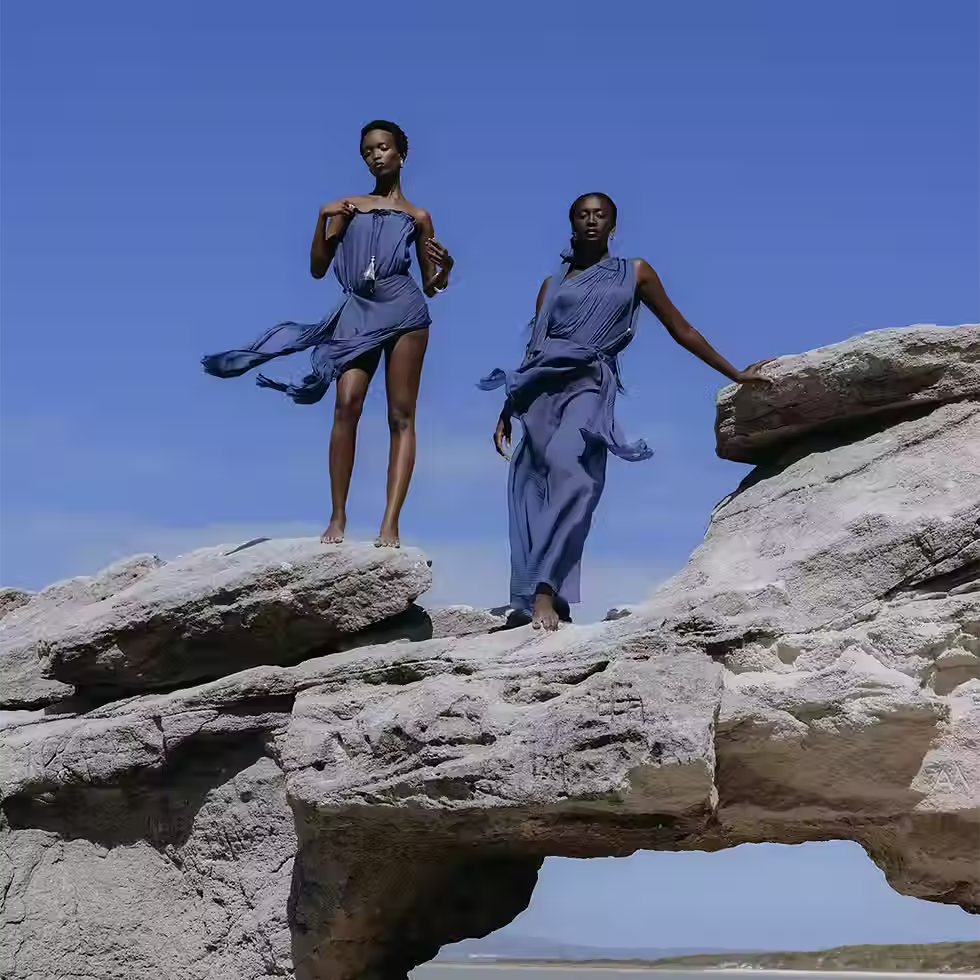
Core Casual shifted things into a more refined space, with clean silhouettes, soft cottons, and a palette of blues and whites. It felt simple, wearable, and easy to build into everyday wardrobes.

The showcase ended with an Indo-Western fusion moment, where botanical prints and earthy tones added a softer, more styled finish to the lineup. It tied everything together without feeling heavy.
What stood out most was how accessible the entire presentation felt. The clothes weren’t just for the runway, they felt made for real life, pieces that could be worn, styled, and reworked in multiple ways.
As Max Fashion celebrates 20 years in India, the showcase felt like a reflection of that journey, growing alongside a generation that sees fashion as a form of self-expression rather than just trends.
It wasn’t just about marking a milestone, it was about showing where the brand stands today, easy, expressive, and in tune with how people actually dress.
And if this runway was anything to go by, the next chapter looks just as exciting.